The Device Trust Layer: Why Firmware Integrity is Becoming a Reliability Issue for the Grid
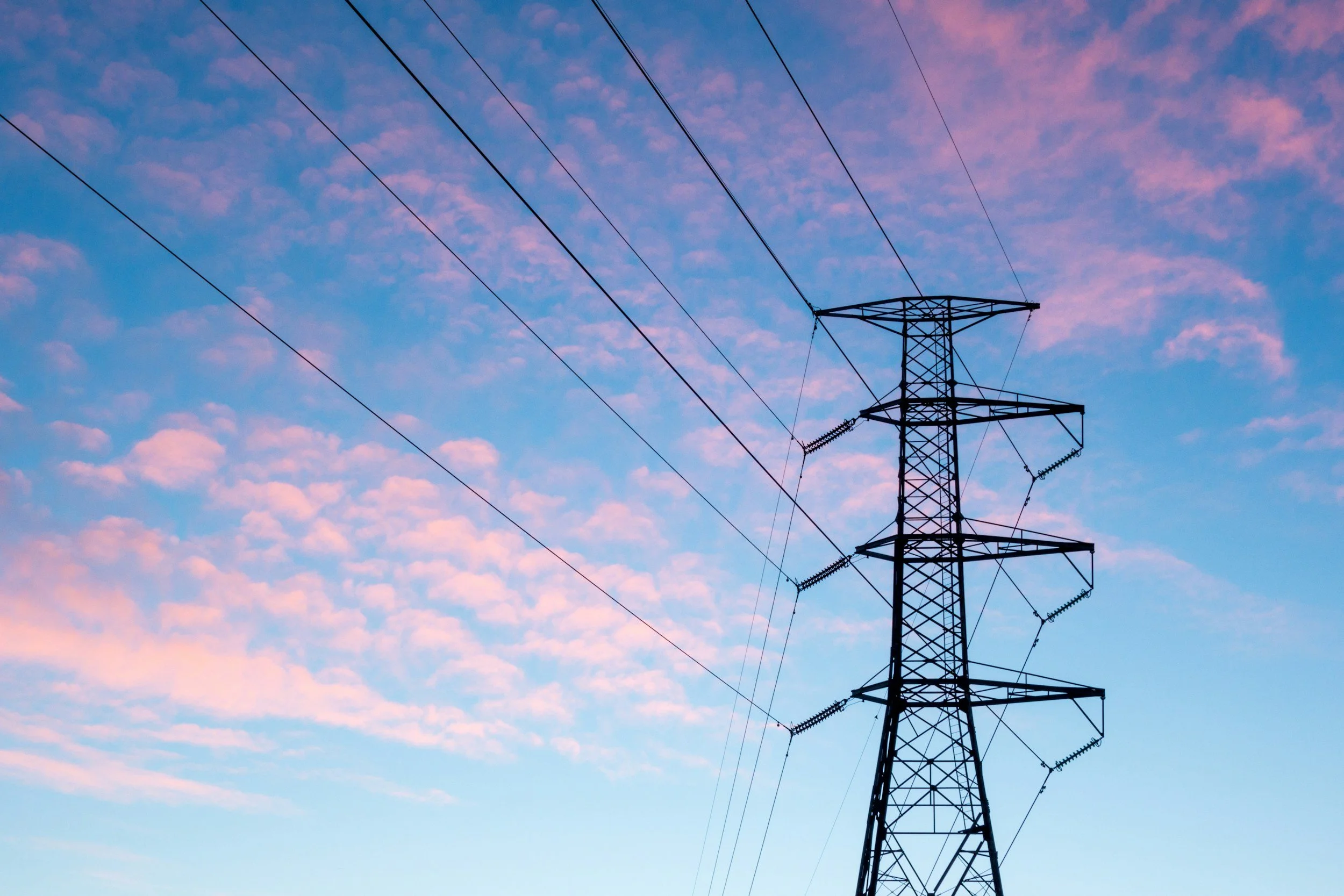
The electric grid is undergoing its most significant architectural shift since the creation of wholesale electricity markets. Millions of distributed energy resources (DER), including solar inverters, EV chargers, battery systems, smart transformers, industrial controllers, and grid-edge sensors, are now embedded throughout power systems worldwide. Each runs firmware, communicates with networks, and increasingly, executes software for physical hardware behavior that influences how the grid itself operates.
As a result, the electric grid is becoming firmware-defined infrastructure, where system reliability increasingly depends on the integrity and behavior of software embedded in millions of connected devices. As these fleets grow, reliability risks are driven not only by individual device failures but by correlated behavior across large populations of identical devices. The behavior of device fleets may become as important to reliability as generation adequacy or transmission capacity.
Yet while markets, grid operations, and infrastructure investment have evolved significantly across the industry, one foundational capability remains missing from the modern grid stack: a device trust layer.
These observations reflect widely discussed industry trends and do not rely on any non-public operational or governance information.
The Missing Layer in the Grid Stack
Historically, reliability was governed through three institutional layers: energy markets that coordinate supply and demand, grid operations that maintain reliability and dispatch resources, and physical infrastructure for generation, transmission, and distribution. Reliability authorities such as the North American Electric Reliability Corporation (NERC) establish and enforce mandatory standards governing how these systems operate.
But none of these layers governs the integrity of the millions of connected devices now embedded within the grid. The grid today includes DER, industrial IoT infrastructure (IIoT), autonomous grid-edge controls, and AI-enabled optimization systems, and each depends on firmware integrity. As new classes of large electricity consumers deploy on-site generation and energy management systems, the number of grid-connected control devices influencing system behavior will continue to expand. Without a mechanism to verify that device software is authentic, secure, and patched against known vulnerabilities, the grid’s reliability exposure grows with every device added.
Firmware Behavior Is Becoming a Reliability Issue
In operational technology (OT) environments, cybersecurity failures can directly affect physical systems. Compromised or misconfigured firmware in grid devices could disrupt DER coordination, manipulate telemetry, interfere with voltage regulation, or propagate vulnerabilities across device fleets.
Reliability frameworks such as NERC’s Critical Infrastructure Protection (CIP) standards have long focused on generation adequacy and transmission constraints. But in a device-dense grid, firmware behavior introduces a new class of risk: synchronized device response. Many grid-connected devices are produced by the same manufacturers, operate with identical firmware, and respond to grid conditions using similar control logic. If thousands or millions of devices react the same way to a disturbance by disconnecting, changing output, or shifting load, the resulting impact can resemble the sudden loss of multiple power plants. This phenomenon is already visible in inverter tripping events and protection-setting responses observed in several power systems.
The April 2025 Iberian Peninsula blackout demonstrated exactly this dynamic. The event was Europe’s first known blackout caused by excessive voltage (rather than a power shortage) that disconnected 31 GW of load across Spain and Portugal for approximately ten hours. The root issue was not renewable generation itself, but how inverter firmware was configured to respond to grid conditions. Large fleets of inverter-controlled devices, operating with firmware set to grid-following mode rather than grid-forming mode, were unable to provide voltage regulation when the system needed it most. The resulting cascade overwhelmed the system. In the United States, FERC Order 827 has required inverter-based resources to provide voltage regulation since 2016, mitigating this specific gap. But the broader lesson is clear: when device firmware behavior is not governed as part of system reliability, the consequences can be catastrophic. As DER fleets scale and new device types join the grid, this class of risk will only grow.
A similar dynamic has appeared in other infrastructure sectors. In 2016, the Mirai botnet exploited vulnerabilities in hundreds of thousands of internet-connected devices running identical firmware. When those devices were simultaneously controlled, they disrupted large portions of the internet by overwhelming core infrastructure services. The power system operates under different reliability frameworks, but the underlying lesson is the same: when large populations of devices share common firmware vulnerabilities or control logic, their synchronized behavior can produce systemic consequences.
Firmware trust is becoming a reliability issue, not just a cybersecurity one.
The Device Trust Layer
To manage this emerging class of risk, the grid requires a new architectural layer focused on device trust. This layer ensures that connected devices participating in the energy ecosystem meet baseline security and integrity requirements throughout their operational life. Just as transmission reliability depends on the physical integrity of lines and transformers, firmware-governed systems require mechanisms to verify the integrity of the software controlling device behavior. Importantly, this layer does not require creating a new regulatory authority. Instead, it provides an architectural capability that existing institutions (i.e. utilities, manufacturers, and reliability organizations) can incorporate into evolving reliability frameworks.
The concept has parallels in other domains. Just as public key infrastructure (PKI) established a trust layer for internet communications that verifies identity, ensures integrity, and manages certificate lifecycles, the grid now needs an analogous trust layer for connected devices. The aviation industry offers another instructive model: the FAA does not simply certify an aircraft once at manufacture. It governs continuous airworthiness through ongoing maintenance, inspection, and configuration management throughout the aircraft’s operational life. Grid-connected devices need an analogous continuous trustworthiness framework that verifies firmware integrity not just at deployment, but across the entire device lifecycle.
Core capabilities include firmware authenticity verification, secure update mechanisms, vulnerability prioritization, device identity and attestation, and lifecycle security management. A device trust layer also enables operators and manufacturers to manage firmware configuration consistency across device fleets to reduce the risk of synchronized misconfiguration, firmware defects, or malicious manipulation propagating across large populations of devices.
Rather than relying on manual processes or fragmented vendor systems, this architectural layer provides a unified mechanism for maintaining device integrity at fleet scale. It allows infrastructure operators to verify that devices are running authenticated software, prioritize vulnerabilities based on operational risk, and deploy secure updates across distributed environments—capabilities that become essential as device fleets grow from thousands to millions.
Early implementations of this concept are beginning to emerge as manufacturers and cybersecurity platforms explore infrastructure for firmware signing, device identity, and lifecycle vulnerability management across connected device fleets. These efforts aim to enable manufacturers and infrastructure operators to verify firmware integrity, prioritize vulnerabilities across device fleets, and securely manage software updates throughout the years-long lifecycle of grid-connected devices.
Existing cybersecurity reliability standards such as NERC CIP have historically focused on protecting control centers, substations, and other bulk electric system cyber assets. As distributed energy resources and grid-edge devices increasingly influence system behavior, future reliability discussions may explore how similar principles for device identity, firmware integrity, and lifecycle security management, can extend to large fleets of connected infrastructure devices.
Three Regulatory Shocks Coming Before the End of This Decade
DER Fleets Become Reliability-Critical
Utilities and grid operators increasingly rely on distributed devices for voltage regulation, demand response, load management, and generation balancing. But current reliability standards largely assume centralized infrastructure. Utilities are already ingesting growing volumes of operational telemetry from distributed resources to manage grid conditions and system complexity. The question emerging is straightforward: how should the reliability of millions of distributed devices be governed? Future standards may include firmware configuration requirements, device identity and authentication mandates, patch management expectations, and operational behavior standards for inverter-based resources. These frameworks would effectively treat device fleets as reliability assets, subject to the same governance rigor as generation and transmission infrastructure.
AI-Assisted Grid Operations
AI systems are beginning to support energy forecasting, optimization, and operational decision-making. Recent architectures demonstrate agent-based systems capable of forecasting demand and renewable output, applying regulatory and operational constraints, optimizing dispatch decisions, and executing actions through grid and market systems. While these capabilities promise operational efficiency, they introduce governance questions that few current frameworks address. Who bears responsibility for AI-driven operational decisions? How are model decisions audited and validated? What safeguards ensure AI actions remain within reliability boundaries? Emerging frameworks will likely include human-in-the-loop requirements, model validation standards, and reliability constraints on AI-driven dispatch decisions.
Cybersecurity Becomes a Reliability Standard
Historically, cybersecurity in energy infrastructure has been treated as an information security issue. But in OT environments, cyber vulnerabilities directly affect physical performance. Recent national cybersecurity strategies have elevated critical infrastructure cybersecurity to a strategic national priority, with emphasis on securing OT supply chains, strengthening device-level controls, and rapidly adopting agentic AI for network defense. These priorities will likely translate into stronger requirements around firmware verification, secure update mechanisms, device attestation, and lifecycle vulnerability management. As device-driven infrastructure expands, these controls will become essential to reliable system operations.
Why This Matters Now
DER adoption is accelerating globally, and infrastructure capabilities are increasingly implemented through firmware rather than fixed hardware. Nation-state actors and criminal organizations are targeting OT networks with growing frequency and sophistication. Long device lifecycles and limited patching capabilities compound the challenge.
Policy momentum is building in parallel. NERC’s reliability standards continue to evolve to address emerging cyber-physical risks. FERC has demonstrated through orders like Order 827 that device-level behavior is a legitimate subject of reliability regulation. And the March 2026 U.S. National Cyber Strategy explicitly calls for hardening the energy grid, securing OT supply chains, and rapidly adopting agentic AI to scale network defense, positioning device trust as a national security imperative.
Meanwhile, AI-enabled coordination architectures are converging with distributed device fleets. Devices will not simply connect to the grid; they will participate in AI-driven operational ecosystems that continuously optimize energy flows and respond to system conditions in real time. The reliability of that AI-enabled infrastructure depends not only on the correctness of algorithms but on the integrity of the devices executing those decisions. If device firmware cannot be trusted, even well-designed AI systems may produce unpredictable outcomes at system scale.
Conclusion
Reliability frameworks have historically evolved in response to structural shifts in how the grid operates. Early standards focused on generation adequacy and transmission planning. As electricity markets developed, new governance mechanisms emerged to coordinate dispatch, manage congestion, and maintain system balance across regions. The rapid expansion of distributed energy resources and digitally controlled infrastructure may represent the next such transition.
The electric grid is evolving from a system governed primarily by generators and transmission lines into one shaped by the behavior of millions of software-driven devices. As that transition accelerates, firmware integrity will increasingly become a reliability issue (not just a cybersecurity concern).
The next evolution of grid governance may therefore require a new architectural layer focused on device trust. Exploring these questions early can help ensure that emerging reliability frameworks evolve in ways that support both innovation and system resilience. Further technical and policy research may help determine how device-level trust frameworks could integrate with existing reliability standards governing distributed energy resources and inverter-based resources. As industry institutions, regulators, and reliability organizations examine these issues, the intersection of cybersecurity and reliability governance will increasingly shape how the software-defined grid is governed.
Trust in device firmware may soon become as foundational to grid reliability as transmission infrastructure and generation adequacy.
Disclosure
Dr. Jeanine Johnson is co-founder of Immutaverse. She also serves on boards, including of a regional grid operator, and has consulting clients. The views expressed in this article are solely those of the author and do not represent those of any board, organization, or client. The analysis reflects the author’s independent research and long-standing interest in the intersection of cybersecurity, engineering systems, and critical infrastructure reliability. All information presented draws on publicly available industry sources and does not rely on any non-public or proprietary information from her board service or client engagements.